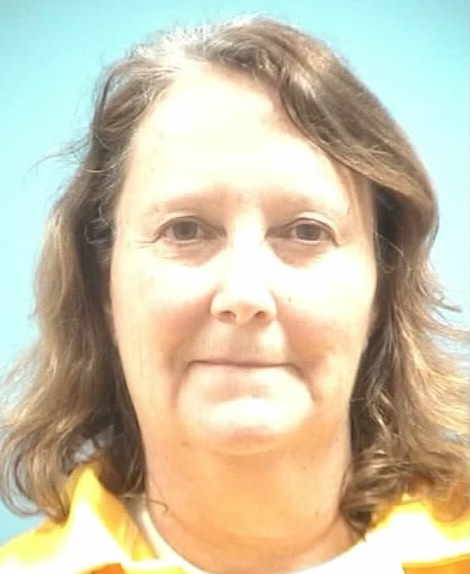
In a place where humanity is so often stripped away, that simple act of sitting beside me in silence became a lifeline.
I was two years into a ten-year sentence in Mississippi when I got the call that shattered my world: my son had died. It was during the peak of the COVID-19 restrictions, no visitation, no hugs from loved ones, no services, no closure. I was stuck in a cold cement room, surrounded by people, yet more isolated than I’d ever felt in my life. The grief was unbearable. I didn’t know how to process the pain, let alone survive it. Most of the women around me wanted to help but didn’t know what to say. Some offered awkward words. Others avoided me altogether, unsure of how to approach a mother mourning the loss of her child behind prison walls. But then there was Lisa. She didn’t try to fix it. She didn’t offer platitudes. She simply sat with me. As a mother herself, she understood that sometimes the greatest comfort isn’t found in words, it’s in presence. She let me cry. She let me break. And in doing so, she gave me the freedom to grieve without judgment, without shame, and most importantly, without being alone. In a place where humanity is so often stripped away, that simple act of sitting beside me in silence became a lifeline. It reminded me that even in my darkest hour, compassion could still break through concrete walls. I want to thank you for allowing me to share a heartfelt personal story.